AI in Education: How Students and Teachers Are Using AI in 2026
The fluorescent lights of a high school in rural Nebraska flicker on at 6:45 AM. Inside, a student named Maria opens her laptop. She doesn't start with a textbook. Instead, she opens a tool that has become as ordinary as a calculator: an AI tutor that knows exactly where she got stuck on last night’s algebra homework. Across the globe, in a university lecture hall in Tokyo, a professor is using an AI to generate real-time quizzes based on the confused looks on students’ faces.
This is not a pilot program or a futuristic vision. This is the reality of education in 2026.
The conversation around AI in the classroom has shifted dramatically. We are past the debates about whether AI should be allowed. The question now is how to use it effectively, ethically, and equitably. Here is a look at the real-world scenarios shaping classrooms today.
The New Classroom Dynamic: AI as a Co-Teacher
Walk into a typical classroom in 2026, and you will likely see a teacher moving between groups of students, offering personalized guidance. The "sage on the stage" model is fading. The teacher is now a facilitator, and the AI is the tireless assistant.
The Lesson Planning Revolution
Teachers have long spent weekends buried in lesson plans. Today, that work has been streamlined. A history teacher can input a topic like "The Industrial Revolution" and specify the grade level, learning objectives, and preferred activity types (e.g., group debate, visual timeline). Within minutes, the AI generates a draft plan, complete with primary source suggestions and differentiated reading materials for students at different levels.
One teacher in Texas described the shift as "gaining back my Sunday afternoons." Instead of spending four hours creating a worksheet, she now spends one hour refining an AI-generated plan, adding her unique human touch—a personal anecdote, a local connection, or a specific cultural reference.
Real-Time Classroom Support
The most impactful change is happening *during* class. AI tools now monitor student progress in real time. Imagine a math teacher explaining quadratic equations. The AI system detects that three students in the back row are struggling with the concept of the discriminant. It immediately sends a notification to the teacher’s tablet: *"Students A, B, and C: Recommend revisiting the concept of the discriminant. Suggested micro-lesson attached."*
The teacher can then pull those three students aside for a quick intervention while the rest of the class continues working. This is the holy grail of education: early intervention without slowing down the entire class.
Grading with Nuance
Grading is another area where AI has matured. The early AI graders were clunky, often penalizing creative writing for grammatical "errors" that were stylistic choices. In 2026, AI grading tools have learned nuance. They can evaluate argument structure, evidence usage, and even creativity within a rubric.
However, the final grade still belongs to the teacher. The AI provides a first draft of feedback (e.g., "Your thesis is strong, but paragraph three lacks supporting evidence"), but the teacher reviews it, ensures it is fair, and adds personalized encouragement. This cuts grading time by roughly 60%, allowing teachers to focus on what they do best: mentoring.
The Student Experience: From Cheating to Cheating-Proof Learning
The fear of AI-driven cheating has not disappeared, but the approach has evolved. Schools have moved from banning tools to redesigning assignments. The focus is now on "process over product."
The Death of the Standard Essay
In 2026, a student is rarely asked to "write a 500-word essay on Shakespeare." That assignment is dead. Why? Because an AI can write it in seconds.
Instead, students are asked to do things that require human cognition. A typical assignment might look like this: *"Use an AI tool to generate three different interpretations of Hamlet's soliloquy. Then, write a 200-word analysis explaining which interpretation you find most compelling and why. Attach your AI conversation log."*
This changes the skill from "writing from scratch" to "critical evaluation and curation." The student learns to argue with the AI, to spot its weaknesses, and to synthesize information. This is a far more valuable skill for the modern workforce.
Personalized AI Tutors (Not Just Chatbots)
The AI tutor of 2026 is a far cry from a simple chatbot. It is a persistent, adaptive learning partner. Consider the scenario of a university student studying for a biology exam.
The student opens their AI tutor and says, "I'm confused about the Krebs cycle."
Instead of spitting out a textbook definition, the AI asks, "What do you remember about glycolysis?" It then runs a quick diagnostic. It realizes the student has a strong understanding of glycolysis but is confusing the inputs and outputs of the next stage. The AI then generates a custom visual, a short animation, and three practice questions that specifically target the confusion point.
Crucially, this tutor has memory. It remembers that the student struggled with cellular respiration last month. It knows the student learns better with diagrams than with text. This level of personalization was previously only available to students who could afford a human private tutor.
Language Learning Goes Immersive
Language learning has been transformed by AI voice synthesis and real-time translation. A student learning Japanese can now have a full, spoken conversation with an AI that mimics a native speaker. The AI adjusts its speed, vocabulary, and accent based on the student's level. It can even role-play scenarios: ordering food at a restaurant, asking for directions, or negotiating a business deal.
The feedback is immediate. The AI might say, "Your pronunciation of 'arigato' is good, but try to soften the 'r' sound. Listen to my pronunciation again." This immersive practice, available 24/7, is accelerating fluency in ways that textbooks and weekly conversation classes could never achieve.
The New Infrastructure: Platforms and Tools
For students and teachers navigating this landscape, the challenge is not finding AI tools—it is finding the *right* ones. The market is flooded with apps, each promising to revolutionize learning. The key is to find curated, reliable resources that are built for real educational outcomes.
This is where dedicated platforms make a difference. For example, www.aiflowyou.com offers a structured "Learning Path" that helps teachers and students move from AI basics to advanced classroom integration. Instead of wandering through a maze of unverified apps, users can follow a guided path that explains which tools work for specific subjects.
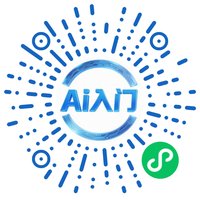
For those who prefer mobile learning, the WeChat Mini Program "AI快速入门手册" (AI Quick Start Guide) has become an essential companion. It provides bite-sized tutorials and tool recommendations that fit into a busy schedule. A teacher can check it during a prep period to find a new AI tool for grading essays, or a student can use it to discover a better tutor for their specific subject.
The key takeaway is that the technology is only as good as the strategy behind it. Using an AI without understanding its strengths and weaknesses is like giving a student a calculator without teaching them multiplication. The best results come from combining powerful tools with a clear learning framework.
The Human Element Remains Central
Despite all this technology, the most important insight from 2026 is that the human role has become *more* valuable, not less. AI can teach facts, test knowledge, and grade assignments. But it cannot inspire a love of learning. It cannot notice a student who is silently struggling with anxiety. It cannot share the joy of a "eureka" moment with genuine empathy.
The best classrooms in 2026 are those where AI handles the repetitive, data-heavy tasks, freeing the human teacher to do what only a human can: connect, mentor, and inspire.
Action Steps for Educators and Students
If you are an educator or a student looking to navigate this new world, start here:
- 1. Focus on Process: Redesign assignments to emphasize critical thinking over content generation. Ask students to critique AI outputs, not just create them.
- 2. Learn the Tools: Spend 30 minutes exploring the resources on www.aiflowyou.com. Understanding the landscape is the first step to using it effectively.
- 3. Start Small: Pick one pain point—like grading or lesson planning—and find one AI tool to help. Don't try to overhaul your entire workflow overnight.
- 4. Stay Curious: The technology is evolving fast. The WeChat Mini Program "AI快速入门手册" is a great way to stay updated without feeling overwhelmed.
The classroom of 2026 is not a cold, automated machine. It is a warm, responsive ecosystem where AI handles the heavy lifting of information processing, and humans focus on the heavy lifting of the heart and mind.